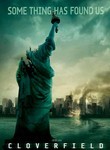
Rating:

Review: Matt Reeves' "Cloverfield" takes a low-budget filmmaking approach and merges it with a high-budget concept. The result is occasionally effective, but ultimately left me feeling cold. Reacting to the movie, I found myself not particularly involved with what happened to these characters. With a few minor exceptions, the movie never felt inauthentic, and yet I was never frightened.
All of you must know the concept by now. It's "found footage" of a monster attacking Manhattan. Using exclusively no-name (but good-looking) actors, Reeves and producer J.J. Abrams add to the movie's credibility - these people never feel likes stars in a high-concept movie. An amateur films the action and has little regard for cinematography or a complete picture. The movie employs a "shaky-cam" that is often disorienting. Viewers who were bothered by "The Blair Witch Projects" camera work would be wise to avoid this movie. Still, the urgency and amateurish quality of footage again makes the movie feel "real." It also adds a little suspense because, at least until the end, we are denied a good glimpse of the monster.
The story: Jason (and his girlfriend Lily) are throwing a going-away party for his brother, Rob. Their friend Hud is asked to film the party. He reluctantly does, but eventually grows fond of the camera, fancying himself as a journalist even after the large unwelcome guest arrives. Hud is a surrogate for the audience. He's obnoxious, demands information, and eavesdrops on private conversations between Rob and his ex, Beth. We watch as Hud haplessly tries to charm Marlene. We watch as a wounded Rob says cruel things to Beth before she angrily leaves. Some have criticized these scenes as too long of a prologue, but I think they are crucial. By watching Hud embarrassingly strike out, we gain sympathy for him (and tolerate his later behavior). If we did not see Rob's transparent feelings for Beth, they would seem more foolhardy than they already are. Then all hell breaks loose.
The group eventually decides that they must journey to Beth's building and save her. Of course, terror ensues along the way. We catch brief glimpses of the monster and (SPOILER ALERT) the insects that it sheds. Some sequences are more effective than others. Climbing into a dilapidated skyscraper, we watch the characters struggle along the floor. This heightens the audience's sense of unease and vertigo, and is one of the better uses of the hand-held camera.
On the other hand, the tunnel sequence, widely noted as the most frightening, is ineffective. I think this is because in order to properly build suspense, the director's camera must be one step ahead of the action. For example, consider the scene in "Halloween" where Laurie thinks Michael is dead, but we see him rise again before she does. That scene generates suspense because we see the danger before Laurie. But because a character holds the camera in "Cloverfield," we understand situations as quickly as the characters do, and there is relatively little opportunity to generate terror. Matt Reeves uses the technique well, but has one hand tied behind his back during crucial moments.
My disappointment with "Cloverfield" might be a result of unreasonably high expectations. I had read too many early reviews that spoke of its unrelenting terror. I had wondered idly what the monster was like. While watching it, I felt unmoved. When the monster was finally revealed, it was less frightening than I had previously thought, lending credence to the theory that the audience's imagination is more evocative than any special effect. Still, it provided a nice alternative from the large-scale monster attack that has dominated horror. I just wish I had left the theater more shaken than I was.
