Monday, January 21, 2008

Once again, the tease is better than the pay-off.

Movie:
Rating:

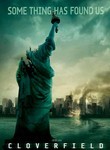
Review: Matt Reeves' "Cloverfield" takes a low-budget filmmaking approach and merges it with a high-budget concept. The result is occasionally effective, but ultimately left me feeling cold. Reacting to the movie, I found myself not particularly involved with what happened to these characters. With a few minor exceptions, the movie never felt inauthentic, and yet I was never frightened.

All of you must know the concept by now. It's "found footage" of a monster attacking Manhattan. Using exclusively no-name (but good-looking) actors, Reeves and producer J.J. Abrams add to the movie's credibility - these people never feel likes stars in a high-concept movie. An amateur films the action and has little regard for cinematography or a complete picture. The movie employs a "shaky-cam" that is often disorienting. Viewers who were bothered by "The Blair Witch Projects" camera work would be wise to avoid this movie. Still, the urgency and amateurish quality of footage again makes the movie feel "real." It also adds a little suspense because, at least until the end, we are denied a good glimpse of the monster.

The story: Jason (and his girlfriend Lily) are throwing a going-away party for his brother, Rob. Their friend Hud is asked to film the party. He reluctantly does, but eventually grows fond of the camera, fancying himself as a journalist even after the large unwelcome guest arrives. Hud is a surrogate for the audience. He's obnoxious, demands information, and eavesdrops on private conversations between Rob and his ex, Beth. We watch as Hud haplessly tries to charm Marlene. We watch as a wounded Rob says cruel things to Beth before she angrily leaves. Some have criticized these scenes as too long of a prologue, but I think they are crucial. By watching Hud embarrassingly strike out, we gain sympathy for him (and tolerate his later behavior). If we did not see Rob's transparent feelings for Beth, they would seem more foolhardy than they already are. Then all hell breaks loose.

The group eventually decides that they must journey to Beth's building and save her. Of course, terror ensues along the way. We catch brief glimpses of the monster and (SPOILER ALERT) the insects that it sheds. Some sequences are more effective than others. Climbing into a dilapidated skyscraper, we watch the characters struggle along the floor. This heightens the audience's sense of unease and vertigo, and is one of the better uses of the hand-held camera.

On the other hand, the tunnel sequence, widely noted as the most frightening, is ineffective. I think this is because in order to properly build suspense, the director's camera must be one step ahead of the action. For example, consider the scene in "Halloween" where Laurie thinks Michael is dead, but we see him rise again before she does. That scene generates suspense because we see the danger before Laurie. But because a character holds the camera in "Cloverfield," we understand situations as quickly as the characters do, and there is relatively little opportunity to generate terror. Matt Reeves uses the technique well, but has one hand tied behind his back during crucial moments.

My disappointment with "Cloverfield" might be a result of unreasonably high expectations. I had read too many early reviews that spoke of its unrelenting terror. I had wondered idly what the monster was like. While watching it, I felt unmoved. When the monster was finally revealed, it was less frightening than I had previously thought, lending credence to the theory that the audience's imagination is more evocative than any special effect. Still, it provided a nice alternative from the large-scale monster attack that has dominated horror. I just wish I had left the theater more shaken than I was.

Saturday, January 12, 2008

Shave and a slit-throat - two bits.

Movie:
Rating:

Review: Note: I've only recently gotten over my prejudice of musicals, and have never seen a Sondheim production before. So I therefore apologize if any of the following observations are systemic of his work and appear completely obvious to those who are familiar with musical theater.

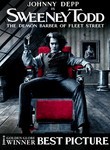
Tim Burton's adaptation of "Sweeney Todd" uses atmosphere and song to make an entertaining examination of the macabre. Make no mistake: the murders are bloody, the characters are vile, and their motivations are twisted. Because those involved in the movie are immensely talented, audiences can easily stomach the sinister story. Left in the hands of someone who does not understand the movie's tone, the misanthropy and gore would have been almost intolerable.

The movie's strongest quality is its look. Tim Burton has always been to make movies that drip with atmosphere ("Sleepy Hollow, "Beetle Juice," "Batman"), and on those terms, "Sweeney Todd" is his finest achievment. He's drained the London streets of color (except for splashes of red, of course). Even a sun-lit dream sequence looks drab and gray. The sets are intimate and ominous. Depp begins the movie by singing about the sorry state of London - the art direction and cinematography confirm his belief. It looks like a Dickensian nightmare, and is utterly captivating.

While the movie looks great, its biggest weakness are its songs. The lyrics are often clever and music plays non-stop, but the numbers are not catchy. I'm not sure if the same can be said of Sondheim's works in general, but as I left the theater, I was not humming any tunes. This is not to say that the songs were awful - there were just no stand-outs.

Not much happens in "Sweeney Todd." Without songs, the movie could have been easily told in twenty minutes. In addition to being entertaining, the songs act like soliloquies - they provide interesting insight into the minds of truly evil people. Johnny Depp's Sweeney is resolutely single-minded in his rage. Accented by harsh black circles, his piercing eyes are utterly devoid of joy or remorse. He simply wants revenge. Depp's singing isn't particularly showy - he sings efficiently and coldly, a decision which helps further the character development. He has a scowl and delivery that closely resembles a punk singer. Helena Bonham Carter's Mrs. Lovett, on the other hand, is gleefully immoral. Her voice sparkles with wit and depravity while also masking hidden desires. Supporting characters, such as the boy and the movie's young couple, have sweet, idealistic-sounding voices. But with such sinister subject matter, their songs seem all the more hopeless. Alan Rickman, as the judge, adds to his list of great villains.

For me, the most surprising element of the movie was its violence. The throat-slittings are stylized but the camera does not cut away from them - we see the messy business and gallons of blood. When bodies hit the floor of Mrs. Lovett's shop, the make an dull thud that is morbidly funny. Despite the initial shock of the murders, I think Burton made a wise choice. It would have been a mistake to lessen the violence because "Sweeney Todd" is just as much a horror movie as it is a musical. For someone who has always loved the former and only began to appreciate the latter, the movie was a treat.

Tuesday, January 8, 2008

An alternative to torture porn

Movie:
Rating:


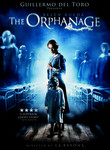
Review: Juan Antonio Bayona’s “The Orphanage” is an excellent guide on how to build dread. Unlike the recent crop of American horror movies which rely too heavily on gore and shock, “The Orphanage” understands that what viewers don’t see is far more frightening than what they do. Comparisons have been made to last year’s “Pan’s Labyrinth,” and they’re not entirely off the mark (the fulcrum of both is a child’s hyperactive imagination). “The Orphanage” isn’t as ambitious or innovative as the popular Guillermo Del Toro feature, but nonetheless provides a suspenseful movie-going experience.

Laura (Belén Rueda), now in her mid thirties, returns to the orphanage of her youth with hopes of jumpstarting a home for disabled children. Accompanying her is Carlos, her pragmatic husband, and Simón, her son with an abundant imagination. The first scenes are ominous and set up some unnerving coincidences. Laura soon invites families of handicapped children for an open-house event. In the midst of this party and some creepy events, Simón disappears. The rest of the movie is Laura’s quest to recover her son.

It becomes clear that Laura can only find Simón once she accepts that supernatural forces are at play. Of course, Carlos regards his wife with sympathy, but then those feelings give way to annoyance. He simply wants his wife to leave the orphanage and acknowledge her son’s death. Laura nonetheless becomes more convinced that Simón is alive, and must be found by reliving her childhood memories. This leads to several suspenseful sequences. Two in particular, one involving a séance and the other involving a childhood game, gather an almost-unbearable level of tension. Sound design and camerawork are particularly effective here. The groans and creaks of the old orphanage are far more evocative than any monster the directors could present. Also, the movie looks great. Shots of the orphanage and its surrounding rocky beach are beautiful yet ominous. Like most atmospheric horror, the movie features lots of deep greens and blues.

Some parts of the movie drag. Horror aficionados will recognize the scenes where the husband doubts the ravings of his increasingly unstable wife. There are too many of those scenes. Yet the performances are uniformly strong. By cutting about twenty minutes from the middle section, however, the movie would have been more effective. Despite these misgivings, "The Orphanage" has a satisfying conclusion. And I can’t help but admire the quality of the direction and the movie’s desire to remain an ambiguous. All the bizarre scenes are subjective - no other character sees the ghosts Laura does. Viewers will leave the theater debating whether she was visited by ghosts or she went insane.

“The Orphanage” is a satisfying picture, but not a superlative one. Still, I am always grateful when a movie successfully manipulates me – even if I am keenly aware of the director’s tricks.

Wednesday, January 2, 2008

There will be praise.

Movie:
Rating:

Review: What a strange, astonishing movie. Paul Thomas Anderson’s “There Will Be Blood” is the best he’s ever made. The first shot sets the tone. We see a harsh, beautiful landscape and hear a rush of strings that grow increasingly loud and discordant. Such a shot, I think, is intended to make the audience ill-at-ease. Like the rest of the movie, the introduction is beautiful yet unnerving.

“There Will Be Blood” tells the story of Daniel Plainview (Daniel Day-Lewis), a misanthropic oil man who desires nothing but success. Money seems almost incidental – Plainview instead wants to ensure that others fail. With the exception of a few guttural phrases, the movie’s first 15 minutes are completely without dialog. We instead watch Plainview and others silently toil underground, and get a sense of Plainview’s unwavering will. Eventually a freak accident kills one of his workers, so Plainview takes care of his son, raising him as one of his own.

The majority of the movie revolves takes place in 1911. Paul Sunday (Paul Dano) informs Plainview that his family has oil just below the surface of the land. Plainview visits the spot, begins drilling for oil, and eventually sets up a pipeline to the coast. Along the way, he encounters several hurdles and finds an adversary in Paul’s twin brother, Eli. The two men prove to be equally devious, humiliating one another in ways that are both cruel and weirdly funny.

Without exception, the performances are flawless. Daniel Day-Lewis’ performance is fascinating. Even when charming land-owners, we see the hatred simmering beneath. As Plainview interacts with people, we watch his face contort with pain and loathing, attacking those around him verbally and sometimes physically. Paul Dano, who I thought gave a decent performance in “Little Miss Sunshine,” does a great job here. His character is a preacher, and Dano does a good job of presenting a faux-pious façade. Even Dillon Feasier, who portrays Plainview’s son, shows depth with his surprisingly adult expressions.

Like his previous work, Anderson’s movie has virtuouso camerawork, and characters that can be both loathsome and sympathetic. Some sequences in particular, such as Plainview’s response to a derrick fire, are completely stunning. Anderson has always oozed talent, but his previous movies are unlike “There Will Be Blood.” His previous movies “Boogie Nights” and “Mangolia” are sprawling and seem over-flowing with ideas, but this one demonstrates a consistent mastery of tone and pace. The movie is a crescendo of tension. “There Will Be Blood” also has richer thematic content. Through the arc of Daniel Plainview, Anderson examines issues of capitalism vs. family, and the shortcomings of rigid individuality. Through the arc of Eli Sunday, Anderson examines issues of church vs. capitalism, as well as the duplicitous nature of religious figures.

All the tension and character development culminates in the final scene. The acting is mercilessly intense. The scene ends with such fury that many critics describe it as over-the-top, but I think it’s perfectly in-step with the rest of the movie. It’s both thematically and character driven. As we watch Sunday and Plainview interact, we see the clash of their natures, of religion and individualism, and of how overwhelming greed distorts all. Don't miss it.

Friday, December 21, 2007

Top Ten of 2007

So, as my thousands of readers have definitely noticed, I haven’t added a new post since October 2007. This is by no means a result of my laziness. It’s just extraordinarily difficult to find Netflix reviews that are hilariously off the mark. Yet I found the blog enormously enjoyable to write.

Keeping that in mind, coupled with the fact that I have a fair amount of free time at my job, I’ve decided to expand the scope of Misses the Point. Starting in 2008, I’ll be writing short reviews of every movie I see in theaters (reviewing every movie I rent would be too time-consuming). I will, however, write about other movies I find particularly striking, or ideas/arguments I have that are movie-related. Whenever I find a spectacularly bad review, I'll be sure to write about it.

To give you an idea of what’s in store, I’m presenting my first annual Top Ten list. I saw many movies this year (quite possibly more than any other year in my life). Many of them were entertaining and thought-provoking, so coming up with a list was quite the challenge. I don’t know about others that do this, but positions 3-10 on my list are pretty arbitrary. I mean, what makes number 8 better than number 9? Keeping that in mind, on with the list:

10. Superbad. This has been a strong year for comedies, and Superbad made me laugh more than any movie I’ve seen this year. Michael Cera and Jonah Hill had fantastic chemistry, and their deliveries made sure that the jokes never grew stale. It certainly helped that I saw this movie with two friends who share my infantile sense of humor. Now when are they going to make a coffee table book of the dick drawings?

9. Helvetica. Yes, this is a documentary about a font. What starts out as a history of the now ubiquitous typeface quickly becomes a history of 20th century design. Thoughtful viewers will notice how the differing design philosophies (an esoteric topic) nevertheless infiltrate our daily lives. Given how common Helvetica is in our world, the font was an excellent entry point for the discussion it raises. It’s available from Netflix on Watch It Now, so I highly recommend you check it out.

8. The Lives of Others. What can I say about this movie that hasn’t been said already? Oh, I liked it better than Pan’s Labyrinth. So there.

7. La Vie En Rose. I was surprised that I found this portrayal of Edith Piaf so moving. The biopics of accomplished musicians always seemed pretty ordinary. After all, Walk Hard takes its inspiration from such clichés. Yet Marion Cotillard gives a great performance, the songs are wonderful, and some sequences literally took my breath away. Julie Christie will probably win Best Actress this March, and that’s bullshit.

6. No End in Sight. I hate political documentaries. Hate them. They’re so slanted that any compelling argument is cast aside in favor of filmmaker’s agenda. Comparatively speaking, No End in Sight takes an objective stance, and points out specifically how Iraq was so mismanaged. Such an approach is far more compelling than the schlock that Michael Moore produces. This is the only movie I’ve ever seen that produced tears of anger.

5. 12:08 East of Bucharest. Full disclosure here: this movie has a unique appeal to me. My family is Romanian, and I’m the first one born in the United States. I don’t speak the language (long story). Therefore, seeing a Romanian comedy illuminated a great deal about my family’s idiosyncrasies. I was given an opportunity to see how my relatives’ quirks are systemic of Romanians in general. That being said, the movie is genuinely funny. It plays like a cross between The Office, Anchorman, and This is Spinal Tap.

4. Atonement. When I read the book, I thought it was unfilmable. So much relies on issues of subjectivity vs. objectivity. The book’s scope is massive. The book's peculiar frame make it so that you don’t really get to know any of the characters. Through Joe Wright’s effortless direction, he remained true to the book, and made a movie that’s both romantic and devastating. Also, the long tracking shot rivals the action sequences found in Children of Men.

3. Black Book. The top three spots will illustrate that I’m a sucker for moral ambiguity. This movie, directed by Paul “Showgirls” Verhoeven, has ambiguity up the wazzoo. It’s is about a Jewish woman who falls involve with the Nazi officer that she tries to deceive. With thrilling set pieces and a compelling story, viewers will easily be caught up in the narrative. At the same time, however, this movie does a good job of illustrating the futility of war, and how it becomes a larger-than-life, chaotic force. Plus, how often do you get a scene of a woman dyeing her pubic hair?

2. No Country for Old Men. Again, what can I say about this movie that hasn’t been said already? Oh, people who don’t like the ending are dumb.

1. Gone Baby Gone. I feel that it’s almost cheating to pick a Boston-based crime saga as my favorite for the second year in a row. This movie has truly flawed but sympathetic characters, suspenseful sequences, fantastic twists, and a doozy of an ending. It’s entertaining yet raises important questions of class and nature vs. nurture. People who don’t like this movie haven’t thought about it long enough. The final sequence creates one of the most fascinating dilemmas I’ve ever seen. When you see it, think about which side you agree with, and what the implications of your choice are.

So there it is. That this list is subject to revision because I haven't seen There Will Be Blood yet. Be sure to comment and let me know just how I’m a fucking idiot. Or just save your snarky comments for my all-new 2008 content. Happy holidays!